
Wind component transport & storage
Sea and road supports for tower sections, yard storage and stacking systems, blade root and tip frames, and cargo-specific bases for nacelles, hubs and other large components.
Granden delivers transport and storage systems for wind components and heavy equipment, and tooling for production and maintenance. We can work from approved drawings, improve an existing design or develop a solution from your operating requirements.
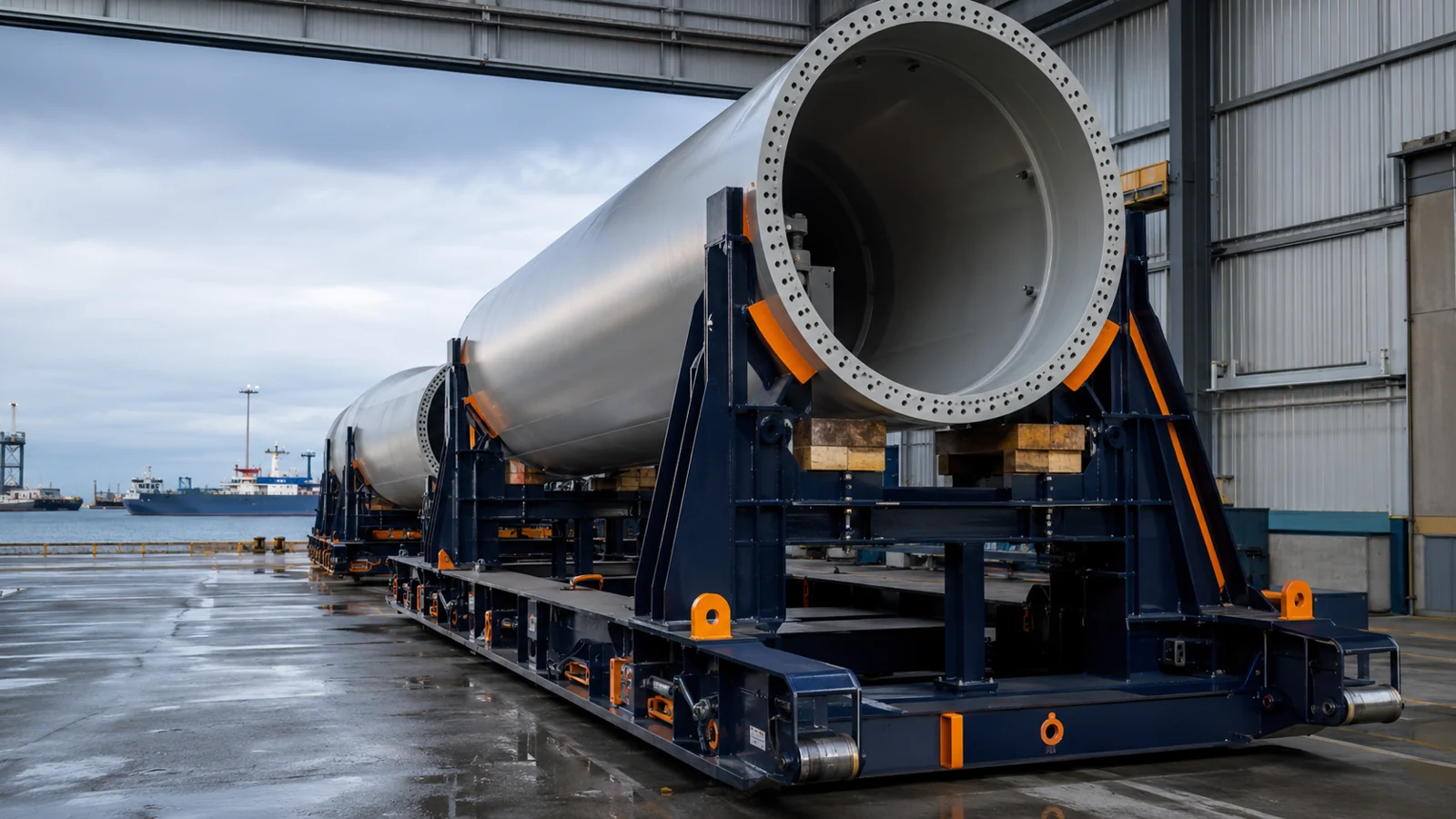
A frame affects every lift, shipment, storage cycle and return journey. We review fabrication cost alongside handling, transport space, storage, return freight, repair and repeat use.
We support wind OEMs and component makers, shipyards and offshore fabricators, heavy equipment manufacturers and engineering logistics providers.
The system is defined around geometry, mass, centre of gravity, load cases and operating interfaces. Transport mode, handling, storage and applicable approval requirements shape the scope.
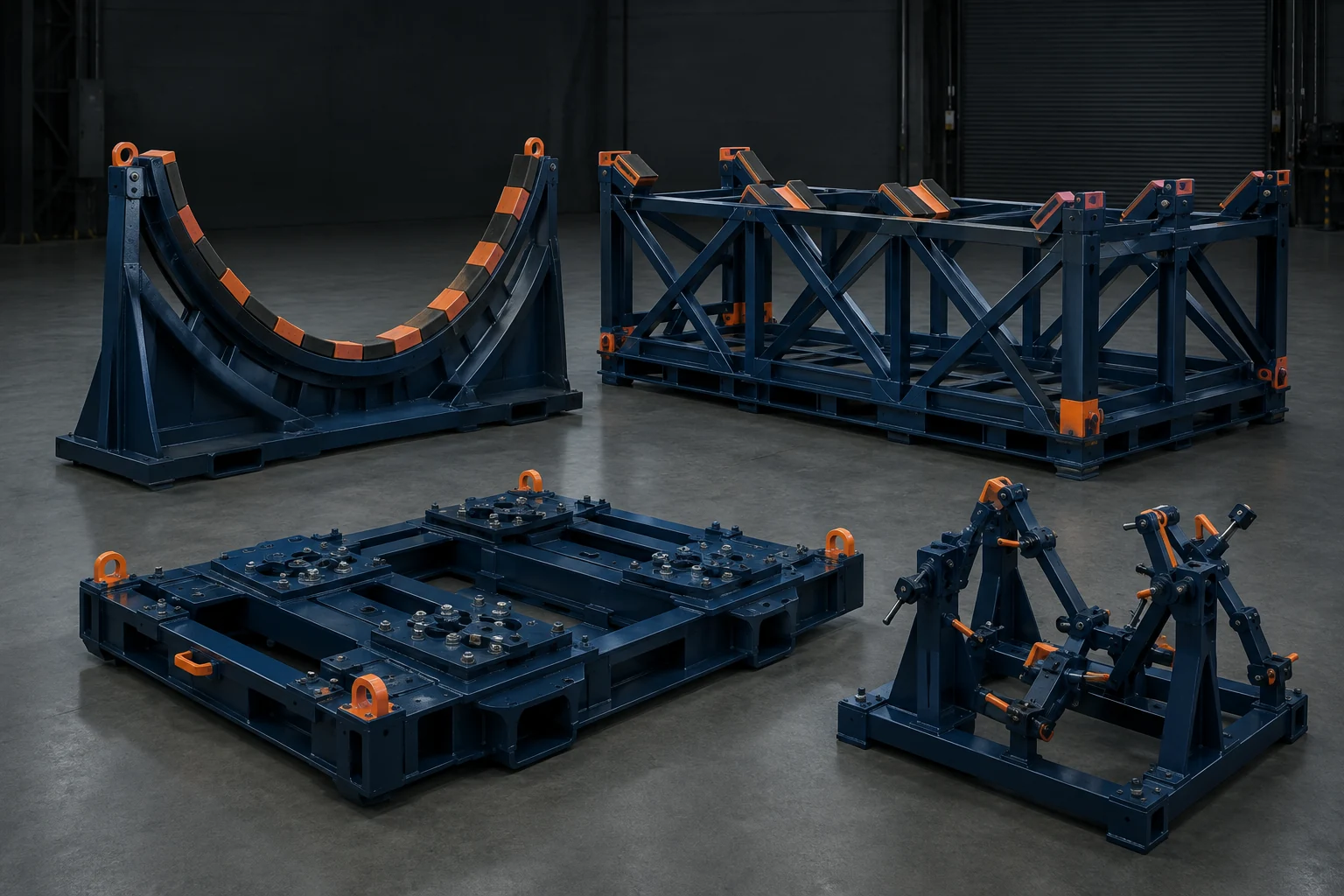
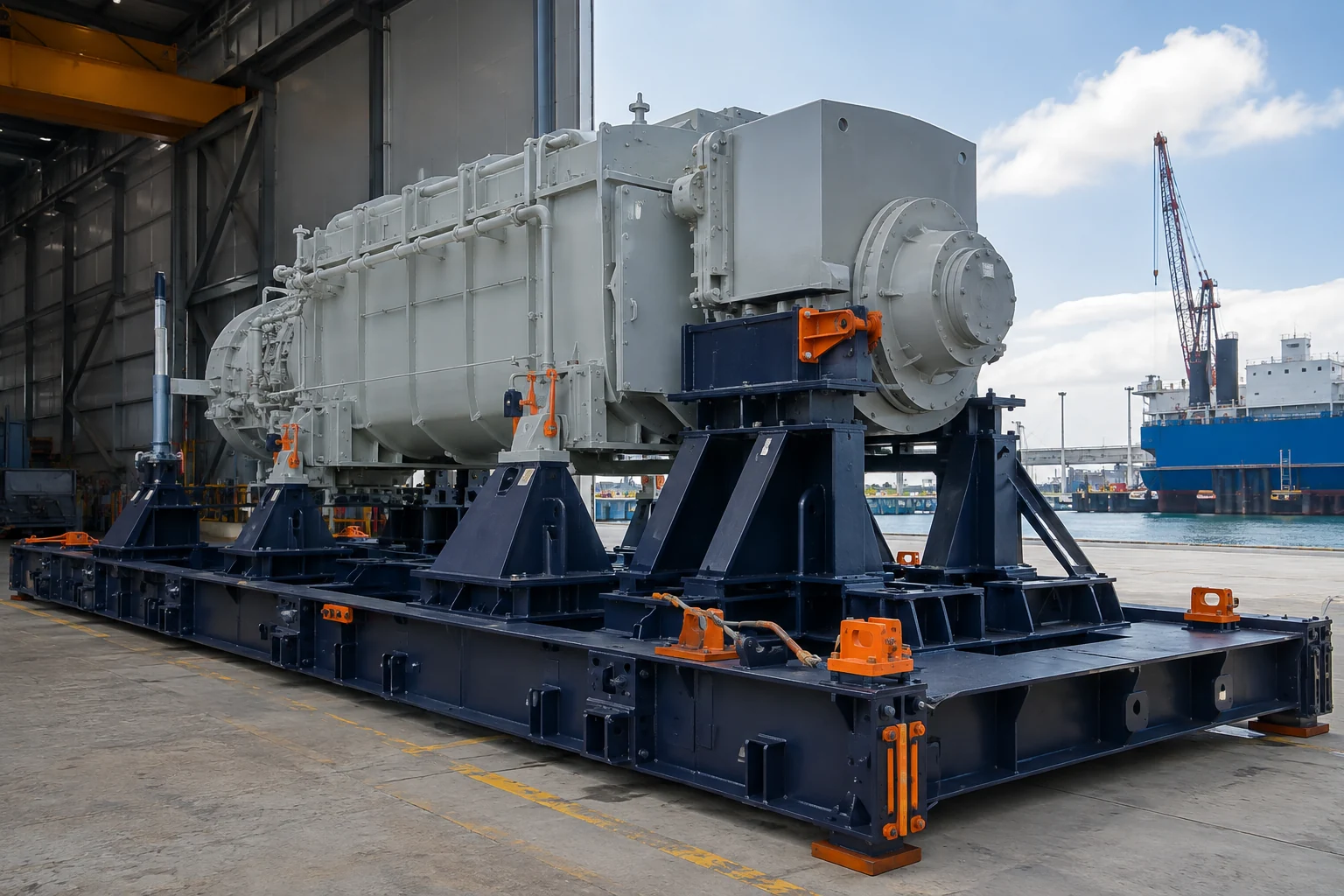
Sea and road supports for tower sections, yard storage and stacking systems, blade root and tip frames, and cargo-specific bases for nacelles, hubs and other large components.
Bases, cradles, saddles, skids, load-spreading structures and sea-fastening interfaces. Frames can be designed for stacking, reuse and efficient return transport.
Welding, fit-up, positioning, assembly, turning and handling fixtures, plus storage supports and maintenance tooling. Loads, access, adjustment and acceptance criteria are defined for the task.
New concepts and controlled improvements to existing designs. We review weight, manufacturability, standardisation, repairability and reuse, with structural analysis or FEA where required.
Qualified partner-factory coordination covering material, welding and dimensional controls, agreed inspections or tests, surface treatment, marking, packing and international handover.
Choose the model that matches the maturity of your design and the scope you want Granden to deliver.
Starting pointApproved drawings, bill of materials and acceptance requirements
We clarify the technical package, coordinate fabrication and inspection, and arrange packing, documentation and delivery to the approved specification.
Starting pointExisting design, operating constraints and agreed improvement targets
We assess options for cost, weight, manufacturability, stacking or reuse, then build to the revised package once the client approves the changes.
Starting pointDefined operating requirement, cargo data, load cases and interfaces
We develop the concept and detailed design, coordinate qualified review and client approval, then manage fabrication, inspection, testing as required and handover.
The project scope assigns responsibility for design inputs and approvals, fabrication, transport operations and inspections before reuse. Appropriately qualified parties handle safety-critical calculations and sign-off, with third-party or class approval where required.
Each package can be quoted under any of the three delivery models, subject to available technical inputs and the required approvals.
Sea and road transport saddles, storage and stacking systems, lifting and restraint interfaces, and reusable frame fleets.
Root and tip frames, blade protection, and interfaces for handling, stacking and return transport.
Configurable bases, cradles, saddles, skids, sea supports and securing structures for machinery, modules and project cargo.
Fixtures for welding, fit-up, positioning, assembly and turning, along with temporary supports, handling and special maintenance tooling.
A review of existing designs or frame fleets that prioritises options for material use, manufacture, standard parts, stacking, return transport and repair, with trade-offs and a route to approval.
We agree the scope, inspection requirements, approval responsibilities and required records with the client before execution.
Agree technical inputs, standards, acceptance criteria, responsibilities and exclusions.
Control drawing revisions and changes, follow the manufacturing and inspection plan, and track interfaces and release milestones.
Provide agreed inspection and test evidence, material and welding records, packing and shipping documentation, and the manufacturing data record or close-out file where required.
Share a drawing, cargo data, load case or description of the operation, along with the target delivery schedule. We can use it to define the scope, deliverables and basis for a quotation.